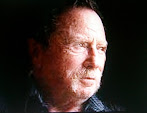
Thursday, July 21, 2011

"I will drink life to the lees" (Tenn)

.....Well, I'm still being treated in a hyperbaric chamber--or bubble as I call it. The Mayo Clinic describes this treatment as breathing pure oxygen in a pressurized chamber. It is commonly used to treat serious infections, bubbles of air in your blood pressure, and wounds that won't heal.  In a hperbaric oxygen chamber, the air pressure is raised up to three times higher than normal.Under these conditions, your lungs can gather up to three  times more oxygen than would be possible breathing it at normal air pressure. The increased oxygen dissolves in your blood during this therapy and circulates throughout your body.Oxygen-rich blood stimulates your body to release substances called growth factors and stem cells which promote healing. I've had a sore on my heal since March which refuses to heal.  Hopefully this therapy will help because the wound is very painful.

.....Val, our aide, who at this time we cannot do without, drives me to the facility about 11:30 every morning and I spend an hour and a half in the bubble. There's nothing I can do in the chamber but nap or watch TV at a set placed outside the chamber.  Let me tell you, it's really quiet and peaceful in there.  I kind of like it.  There's no one to bother me.  When I'm released, Val usually drives us to lunch at a local deli.  Rhoda often comes to join us. At home I have to contend with a wound care nurse who comes every three days to dress the wound, and then a physical therapy nurse who comes to give me her version of therapy which includes torture. So, in other words, I'm a physical wreck.  

.....I've been enjoying the banter on the comments to this blog, and the chatter among my readers mostly of whom are Phil B, JR, EllenJ, and Ruth, my compatriot and new cousin across the ocean. Recently there's been a dialogue involving why and how medals are awarded, and it has been of great interest to me.  I only hope there is no rancor developing because of different theories by different participants. All is past, anyway, I have the medals and they're hanging on the wall and one of my four will get them when I'm past. Actually, the medals aren't there at all. They are in a briefcase in my closet.  The ribbons representing them are on the wall. The medals are beautiful, and you're allowed to wear them on your tux at bar mitzvahs and weddings.  Since there are no bar mitzvahs in the near future, perhaps there will be a wedding. The grandchildren ought to stop fooling around and look for a partner.  I did--and look what I found!

Monday, July 18, 2011

"Be wary then, best safety lies in fear" (Hamlet)


.....One day  we were on submarine patrol in the English Channel.  Our mission was to protect the convoys that were shipping armaments and supplies to England from the United States.  Subs had attacked and torpedoed and sank two ships to this time.  I was on the radio and navigating the flight for two hours before returning to the tail guns.  Suddenly, flack began to appear in our path.  Unfortunately, I had mistakenly navigated us over Guernsey and Jersey which we were told to avoid, and we were the target of the German guns on those islands.  The flack was all around us from Nazi guns, which were very accurate.  The flack tore a hole in the plane near the bomb bay doors and also wounded Norman England in his right leg as he manned the waist guns.  Blood was pouring out from this wound, and so immediately I tore my skivvy shirt and applied a tourniquet to England’s leg while he grit his teeth in pain Our plane was hit so hard by the flack that it rendered us unflyable; we had to ditch into the English Channel.  England did not know how to swim and his leg needed much more attention than I was able to give him, but at least the tourniquet stopped the bleeding.  We were going down into the dark water, but strangely I had no fear. When something like this misadventure occurs defenses come to the fore.  I was 17 and I would not, could not die.  The plane landed with a thump, thump, thump and when it came to a stop, and before it sank I grabbed England by his collar and swam out of the plane’s waist hatch.

…..Luckily, I was a very good swimmer having lived a block from the Atlantic Ocean in my younger years.  I knew I would  have to keep England afloat; and I was able to do that for a while,  and feared that I could not do it for much longer in the freezing water. But what I saw coming directly at us, made me hysterical with joy, tearful though it was.  An English rescue boat fished us out of the freezing water in a second or two and supplied us with warm blankets.  Norman was brought to the medical room where he was attended to by a couple of RNs.  I did not see any other members of my crew, but when we got to Plymouth I met them all in the hospital.  It was a fearsome thing to be shot out of the sky, but the skill of our pilot, Lt. Noehren, made our ditching easy enough for all of us to escape into the water and await rescue by the English, and so it came to pass.

Saturday, July 16, 2011

"We few, we happy few, we band of brothers." (Henry V)


.....Several readers have indicated that they would like to know a little more of my experiences in WWII that would warrant the award I received of the DFC, (Distinguished Flying Cross.)  I have been reticent about writing or speaking about anything  I had done because the memories of these events are painful, and have required the need for therapy; for the PTSD that evolved, although in WWII it was called “battle fatigue”.  But in deference to my readers, most of whom are former students-- during my years in the classroom they never really knew too much about me.  In deference to them I will recount one of the more dangerous acts that occurred in mid flight in the Bay of Biscay—not too far from the shores of Spain and France. Our mission this day was to hunt and kill enemy submarines that were causing havoc to the shipping of weapons across the Atlantic to our allies. But first let me bring to your attention the criteria for the award of the DFC.

. Criteria: The Distinguished Flying Cross is awarded to any person who, while serving in any capacity with the Armed Forces of the United States, distinguishes himself by heroism or extraordinary achievement while participating in aerial flight. The performance of the act of heroism must be evidenced by voluntary action above and beyond the call of duty. The extraordinary achievement must have resulted in an accomplishment so exceptional and outstanding as to clearly set the individual apart from his comrades or from other persons in similar circumstances. 

…..Let me tell what I encountered this day as simply as I can.  We all had to check our turrets and the 50 caliber machine guns that were operated hydraulically.  Don Fraser was busy in the nose turret when his guns jammed. He had problems getting them into working condition. I volunteered to replace him in the turret to see whether or not I could fix the problem.  Down on the ground, during training, I was pretty good at getting jammed guns unjammed.The working condition of the nose turret guns was of extreme importance in the event we were attacked by enemy aircraft. As I lowered myself into the turret-- ,just at that moment two Junkers 87 Stuka German fighter planes swooped down at us out of the clouds; I was swiftly able to get the turret and guns in working condition and I notified our pilot, Lt. Noehren to that effect and he took evasive action even though he never saw the planes.  But then I witnessed these two fiersome aircraft flying directly toward me while I occupied the turret. With great good fortune (or was it skill?) I was able to hit, with my bullets, one of these planes and severely disabling the other. 

.....My condition was not of the best; I was shaking uncontrollably. I never had occasion to kill anyone, never fired a weapon in anger at anyone,and I was suddenly saddened by the fact that I killed, most likely, a young man who had his whole life before him, and now he was dead because I had the good fortune to hit my targets as quickly as I did.  I witnessed a thin plume of smoke emanating from one aircraft and then a great flame that caressed its whole body as it plunged into the sea. Perhaps this man left a wife and kids back home; perhaps parents who would grieve endlessly at their loss. I found these thoughts very unsettling; I left that turret as quickly as I could and I found an empty pineapple juice can and promptly threw up into it.  Now, dear reader, study once more the criteria for the award of the DFC to see for yourselves whether or not I deserved this medal, and whether or not I was totally remiss in not recounting this event—or others—in the classroom during my years as a teacher.